


What Are Indonesia’s Export and Import Tariffs?
September 28, 2026
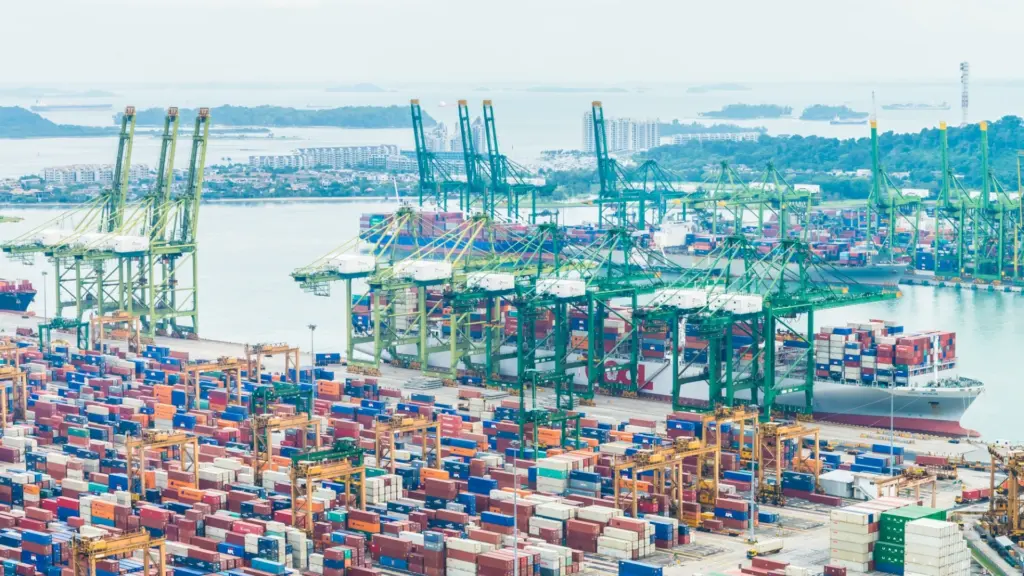
Understanding Indonesia’s export and import tariffs is essential for any business importing raw materials, exporting finished goods, or establishing manufacturing facilities in the country. Indonesia’s tariff system forms the foundation of the country’s trade policy, determining the applicable customs duties and border taxes that impact overall production costs and market competitiveness.
This guide explains how Indonesia’s export and import tariffs work, including current rates and recent policy updates. It covers applicable exemptions and customs facilities that affect manufacturers, logistics providers, and trading enterprises managing operational costs and maintaining resilient supply chains.
Understanding Indonesia’s Export and Import Tariffs Structure
Indonesia’s customs duty framework is governed by the Ministry of Finance, which establishes and periodically adjusts tariff rates aligned with trade policy objectives and international commitments. The foundation of tariff determination rests on the Harmonized System (HS) code, an internationally standardized product classification system that assigns every tradeable good to a specific six-digit code (further extended to eight-digit codes under the ASEAN Harmonised Tariff Nomenclature / AHTN).
Each HS code carries a corresponding duty rate that defines the percentage of value added at the border. For instance, subtle variations in technical specifications—such as distinguishing processors from memory units under heading 8542—can determine whether a shipment qualifies for specific exemptions or requires distinct import permits (Persetujuan Impor/PI). Accurate HS classification is therefore critical.
Misclassification can result in overpaying duties, triggering customs penalties, or facing shipment delays. Indonesia’s tariff rates fall into several categories. Most imports face a “most-favored-nation” (MFN) duty rate, which represents the baseline duty applied to trading partners with whom Indonesia maintains standard trade relationships.
However, imports from countries with which Indonesia maintains free trade agreements qualify for preferential rates. These countries include ASEAN member states under the ASEAN Free Trade Area (AFTA), as well as Australia, India, South Korea, and Japan. Preferential rates are significantly lower or zero, creating substantial cost advantages for manufacturers using suppliers from agreement partners.
Read also:
Key Import Tariff Rates and Policy Updates
Indonesia’s import tariff structure reflects different policy objectives across commodity categories.
1. Standard Rates Applied to Raw Materials for Manufacturing
Raw materials essential to manufacturing operations include metals, chemicals, plastics, and textiles. These materials carry standard import duties that vary by specific product and processing stage. Unprocessed or semi-processed inputs generally face lower duties than finished components, creating incentives for domestic value-added processing.
Steel coils imported for automotive or construction use typically face duties of 10% to 15%, whereas specialized raw billets may incur lower baseline rates, and finished steel products like sheets and tubes carry 15% to 20% duties. This structure encourages manufacturers to import primary inputs and process them locally rather than purchasing finished inventory abroad.
Chemical raw materials face tiered tariff treatment. Basic inorganic chemicals are frequently taxed at 0% to 5%, while specialized pharmaceutical precursors and intermediate formulations face 10% to 15% duties. This reflects Indonesia’s policy to support domestic pharmaceutical and specialty chemical manufacturing while protecting strategic local industries.
Tariff rates are published in official customs tariff schedules (Buku Tarif Kepabeanan Indonesia – BTKI). You can access these through the customs tariff portal and the Indonesia National Single Window (INSW) platform. Additionally, commercial tariff databases like Global Trade Atlas and World Integrated Trade Solutions (WITS) operated by the World Bank provide comprehensive resources. These allow you to verify exact duty rates before committing to shipments, enabling accurate cost forecasting and supply chain planning.
2. Machinery and Capital Goods Import Arrangements
Manufacturers importing machinery for installation in production facilities can defer or eliminate tariff payments through customs regimes such as Bonded Zones (Kawasan Berikat), Bonded Warehouses (Gudang Berikat), and temporary import procedures. Under a bonded regime, imported equipment enters Indonesia and is stored or operated within a customs-controlled facility without the immediate payment of import duties, Import Value Added Tax (VAT), or Article 22 Income Tax.
This arrangement supports manufacturing investment because companies can install high-value equipment, commence commercial production, and defer duty payments until the finished goods enter the domestic market, or achieve complete duty exemption if the output is dedicated for export. Machinery imported under a temporary import regime can enter duty-free for up to three years (extendable depending on customs approval), providing manufacturers with operational flexibility before deciding on permanent clearance or re-export.
Trade Agreement Preferences and Exemption Pathways
Indonesia’s free trade agreements with major trading partners unlock preferential rates that can reduce or eliminate duties on qualifying inputs. The ASEAN Trade in Goods Agreement (ATIGA) eliminates duties on most manufactured goods traded among member states. A Malaysian manufacturer exporting components to an Indonesian facility qualifies for zero duty treatment. Similarly, the Indonesia-Korea Comprehensive Economic Partnership Agreement (IK-CEPA).
Accessing these preferences requires proper documentation. Exporters must provide an authentic Certificate of Origin (Form D for ASEAN, Form AK/IK for South Korea, Form RCEP for regional trade, or authorized e-COO submissions), confirming that the product meets the agreement’s Rules of Origin (ROO). Businesses optimizing tariff costs should engage with trade agreement specialists or customs brokers familiar with origin requirements and preferential eligibility. Failing to claim applicable preferences leaves money on the table.
Capital Goods and Industrial Machinery Duty Reductions
Indonesia grants duty exemptions or reductions on imported machinery and capital goods for new investments and industrial expansion through the Masterlist facility issued by the Ministry of Investment/BKPM. High-capacity manufacturing machinery, semiconductor production equipment, and clean energy systems often qualify for accelerated depreciation or temporary import status. The Ministry of Industry publishes lists of qualify for 0% import duty for up to two years of facility construction and trial operation.
Textile, automotive, and high-tech manufacturers can leverage this facility when constructing new production facilities. This incentive is designed to encourage manufacturing investment and job creation in priority sectors. These arrangements require advance approval from customs authorities and compliance with technical verification (Laporan Surveyor). Engaging a customs broker experienced in investment incentive administration ensures proper procedures and prevents inadvertent violations.
3. Recent Adjustments in Consumer Goods Taxation
Indonesia periodically adjusts duties on consumer electronics and household products in response to trade negotiations and domestic policy objectives. Import duties on finished electronic devices, household appliances, and select consumer goods are continuously monitored alongside local content requirements (Tingkat Komponen Dalam Negeri / TKDN). These adjustments reflect Indonesia’s strategy to encourage assembly operations within the country rather than importing finished consumer products.
Televisions and computer monitors face duties of 15% to 20% when imported as finished products. Components including screens, circuit boards, and metal casings face lower 5% to 10% duties or 0% under preferential FTA schemes. This structure incentivizes manufacturers to import components and assemble finished products locally.
Traders and retailers monitoring consumer goods import costs should track regulatory updates from the Directorate General of Customs and Excise and the Ministry of Trade (Kemendag). Tariff rate changes often take effect with short notice, affecting purchasing decisions and inventory planning. Advance notice of duties through customs brokers allows you to adjust timing and quantity decisions to optimize costs.
Luxury Goods and Protective Tariff Applications
Luxury goods including high-end cosmetics, designer apparel, and premium beverages face elevated duty rates alongside the Luxury Goods Sales Tax (PPnBM), which can range from 10% up to 200% on specific high-end luxury items and motor vehicles.
These higher rates reflect both protective tariff policy and fiscal policy objectives. A luxury handbag faces standard border duties plus applicable luxury taxes, while locally manufactured alternatives avoid import tariffs entirely, creating price incentives that favor domestic production.
Export Duties and Commodity Taxation Rules
Indonesia applies export duties (Bea Keluar) and levies primarily to unprocessed natural resources. This serves as a mechanism to encourage domestic value-added processing and generate government revenue. These export duties represent a significant consideration for commodity exporters and traders managing supply chains involving Indonesian materials:
- Nickel ore: Under regulations enforced since January 2020, raw nickel ore export is entirely banned (prohibited) to mandate domestic smelting and downstream processing. Exporters must process nickel into ferronickel (FeNi), nickel pig iron (NPI), or battery-grade chemicals (MHP/nickel sulfate) prior to export.
- Palm oil and palm-derived products: Palm oil exports are subject to a progressive export duty (Bea Keluar) governed by Ministry of Finance regulations and benchmarked monthly by the Ministry of Trade, as well as an export levy collected by the Palm Oil Plantation Fund Management Agency (BPDPKS). Rates fluctuate dynamically according to international crude palm oil (CPO) market prices.
- Mineral concentrates: Mineral concentrates including copper, iron, and zinc face export taxes calculated as percentages of benchmark export prices under specific transition rules, encouraging full domestic smelting facility completion. Refined copper cathode and smelted metals face 0% export tax, directly incentivizing domestic processing.
- Finished manufactured goods: Automotive components, textiles, electronics, and assembled machinery face 0% export duties. This reflects Indonesia’s commitment to supporting manufacturing exports under regional trade agreements.
- Agricultural products: Key agricultural exports such as coffee, cocoa, and rubber face minimal to zero regular export duties, though export permits and quality certifications apply to guarantee international phytosanitary standards.
Understanding these export duties helps you plan sourcing and supply chain strategies around Indonesia’s production incentives and compliance requirements.
Read also:
Comparing Trade Compliance Approaches for Businesses
| Compliance Strategy | Processing Timeline | Typical Cost Savings | Best Use Case |
|---|---|---|---|
| Standard customs clearance | 2-5 business days | Baseline duty payment only | One-off imports, routine supply chain shipments |
| Bonded warehouse arrangement | Setup 1-2 weeks. Storage indefinite | 0% duty during storage. Deferred or eliminated if re-export | High-value machinery, trial imports, equipment for manufacturing pilots |
| Free trade agreement preference | Requires Certificate of Origin. Adds 1-2 days | 5%-40% duty reduction per tariff rate | Regular imports from ASEAN, Australia, India, South Korea, Japan partners |
| Automated tariff classification tool | Classification within hours | Prevents misclassification penalties (5%-50% of duty value) | Large-scale importers, manufacturers with complex product portfolios |
| Customs broker engagement | 3-7 business days including brokerage fee | 2%-8% reduction through optimization. Prevents penalties | Complex shipments, first-time importers, uncertain tariff classification |
Businesses handling routine imports benefit most from standard customs clearance when tariff costs are predictable and shipment values justify processing timelines. Manufacturers establishing facilities and importing capital equipment should prioritize Bonded Zone status, Masterlist duty exemptions, or temporary import regimes that defer duties and reduce upfront costs.
Enterprises with regular shipments from ASEAN or free trade agreement partners should invest in origin compliance aand electronic Certificate of Origin (e-COO) systems that automatically capture duty reductions. Companies managing large product portfolios or unfamiliar with tariff classification should implement automated classification tools or retain certified Customs Brokers (PPJK) to prevent costly misclassifications.
The strategy that minimizes total cost combines duty reduction, compliance penalties avoided, and processing efficiency. Your optimal approach depends on shipment frequency, value, and product complexity.
Optimize Your Trade Strategy with Subang Smartpolitan
Understanding Indonesia’s import and export tariffs is essential for businesses involved in manufacturing and international trade, as tariff rates directly affect material costs, product pricing, and supply chain expenses. Accurate HS code classification, preferential trade agreement eligibility, and efficient customs procedures can help businesses reduce duty costs while maintaining compliance.
The first step is verifying the correct HS code and applicable tariff rate through Indonesia’s official customs tariff schedule (BTKI and INSW). Misclassification can lead to higher duties, penalties, and shipment delays. Businesses should also assess eligibility for preferential rates under agreements such as AFTA, RCEP, and bilateral CEPA pacts, which can reduce or eliminate duties for qualifying goods when supported by the required certificates of origin and documentation.
Businesses can further improve tariff efficiency by using customs facilities such as Bonded Zones (Kawasan Berikat), which allow raw materials, intermediate inputs, and machinery to be stored and processed under customs supervision without immediate duty and tax payment. Manufacturers also benefit from KITE (Kemudahan Impor Kemudahan Ekspor) schemes, which can allow eligible raw materials and components to enter duty-free for processing and export. While these schemes require accurate documentation and inventory tracking, they can significantly improve cash flow and reduce overall duty costs.
Ready to establish or expand your manufacturing operations in Indonesia with optimized tariff strategies? Subang Smartpolitan provides comprehensive support including advisory services and integrated logistics infrastructure designed to minimize your import and export costs. Contact our investment team today to explore how your business can benefit from strategic location advantages and specialized trade facilitation support.