

Building Future-Ready Industries is the defining challenge for modern manufacturers seeking to balance rapid economic growth with sustainable practices. Indonesia is rapidly positioning itself as a global manufacturing hub, attracting significant Foreign Direct Investment (FDI) across critical sectors like the Electric Vehicle (EV) ecosystem, textiles, and high-tech manufacturing. However, as global supply chains evolve, the traditional playbook for industrial expansion is no longer sufficient. Today, international investors and global markets demand more than just cost-efficiency; they demand environmental responsibility.
To remain competitive, companies expanding or operating in Indonesia must transition into Future-Ready Industries. This means adopting a dual mandate: aggressively driving economic growth while rigorously implementing sustainable, Net Zero-aligned practices. The shift toward green manufacturing is not just a regulatory hurdle—it is a strategic advantage that unlocks new markets, lowers long-term operational costs, and builds resilience.
Why Sustainability is a Business Imperative
For decades, industrial growth in developing nations often came at the expense of environmental health. However, a paradigm shift is underway. International frameworks, stringent export regulations, and conscious consumerism are forcing manufacturers to rethink their operations.
In Indonesia, the government and private sector are actively promoting the development of green industrial townships and eco-industrial parks. As the country builds robust infrastructure—integrating deep seaports, toll networks, and smart logistical hubs—the focus is simultaneously shifting toward clean energy, waste reduction, and circular economy principles. For manufacturers, becoming one of tomorrow’s Future-Ready Industries is the only way to secure long-term profitability and maintain access to top-tier global partnerships.
Ways to Achieve Both Growth and Sustainability
Balancing expansion with ecological responsibility requires a holistic, operational shift. Manufacturers can achieve this by integrating the following strategies:
- Adopt Circular Economy Principles: Move away from the traditional “take-make-dispose” model. Design products for longevity, reuse materials, and explore industrial symbiosis—where the waste byproduct of one facility becomes the raw material for another.
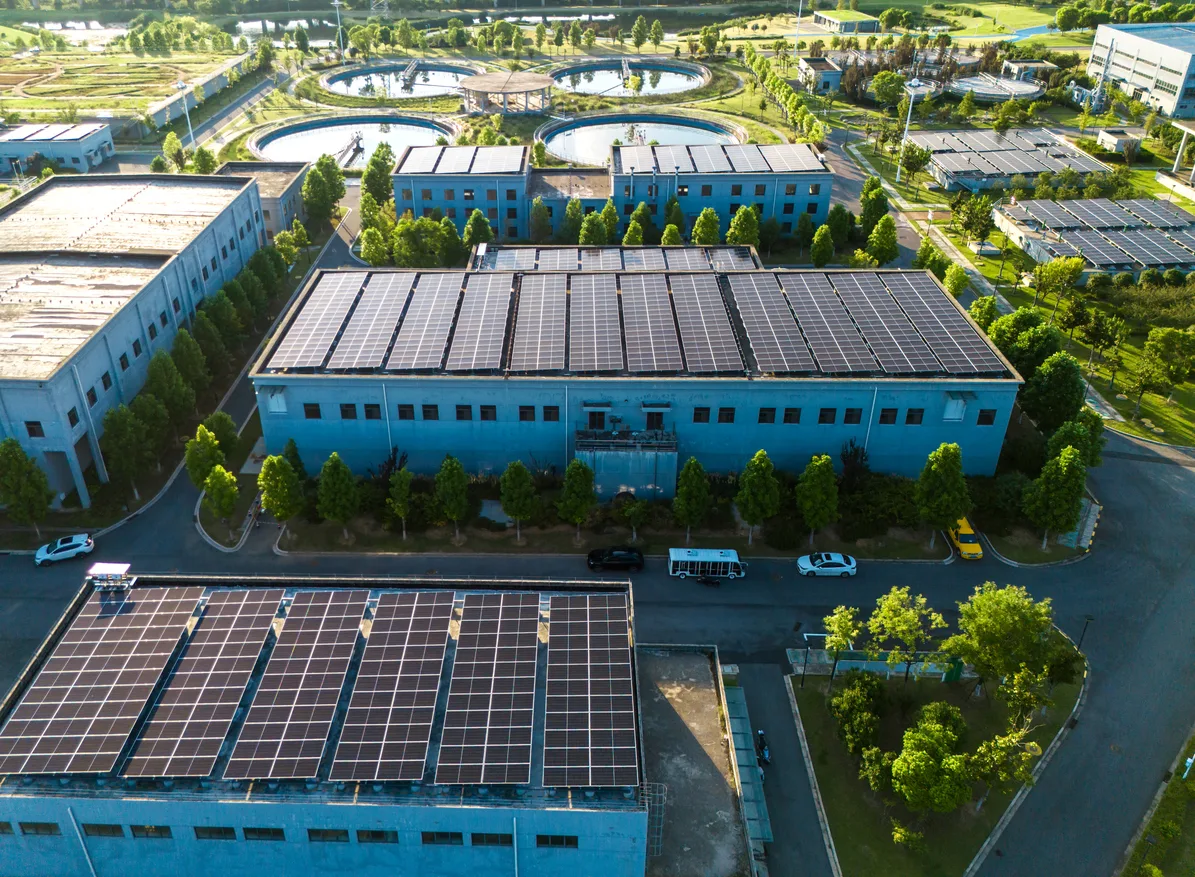
- Invest in Renewable Energy and Efficiency: Transitioning to solar or biomass energy sources significantly reduces a facility’s carbon footprint. Additionally, adopting smart-grid technologies and IoT-driven operational efficiencies within smart industrial parks can drastically cut energy consumption.
- Leverage Smart Infrastructure and Logistics: Optimize supply chains by choosing industrial locations that offer strategic, direct connectivity to major toll roads and seaports. This synergy reduces transportation emissions and logistical costs, directly boosting the bottom line.
- Implement Advanced Water and Waste Management: Utilize cutting-edge wastewater treatment technologies and closed-loop water recycling. Reducing reliance on local water supplies and minimizing landfill waste are critical for regulatory compliance and community relations.
- Upskill the Workforce: Future-Ready Industries require a future-ready workforce. Establish vocational training programs to equip local talent with the skills needed to operate advanced, eco-friendly manufacturing technologies.
Accelerating Success with a Future-Ready Industrial Estate
Transitioning to green manufacturing is significantly easier when you do not have to build the foundational infrastructure from scratch. A future-ready industrial estate acts as a plug-and-play ecosystem that actively supports both your operational expansion and your environmental targets. By operating in a strategically designed township, manufacturers gain instant access to a collaborative, resource-efficient environment:
Integrated Green Utilities: Shared access to centralized wastewater treatment facilities, closed-loop water recycling, and reliable green energy grids eliminates the need for heavy individual capital investments.
Smart City Operations: Advanced IoT networks and centralized command centers help optimize traffic management, monitor environmental compliance in real-time, and ensure seamless logistics.
Strategic Connectivity: Direct, integrated access to major national infrastructure—such as newly developed toll roads, deep seaports, and international airports—slashes transportation times and costs while dramatically shrinking a supply chain’s carbon footprint.
In short, a forward-looking industrial estate does not just lease land; it provides the comprehensive infrastructure and collaborative ecosystem required to scale responsibly and efficiently for future-ready industries.
Conclusion
The path to building Future-Ready Industries is complex but entirely achievable. As Indonesia continues to solidify its role as a premier investment destination, the companies that will thrive are those that view sustainability and economic growth as complementary forces.
Achieving this balance is significantly easier when manufacturers operate within an ecosystem designed to support these very goals. This is where modern industrial townships like Subang Smartpolitan play a crucial role. By offering a meticulously planned environment equipped with smart grid technology, integrated waste and water management systems, and direct connectivity to major logistical hubs like Patimban Port and the Trans-Java Toll Road, Subang Smartpolitan provides the ideal foundation for companies looking to expand responsibly.
Ultimately, investing in sustainability today—and choosing the right infrastructure to support it—is the most effective way to ensure resilient, profitable, and future-proof operations for decades to come.