

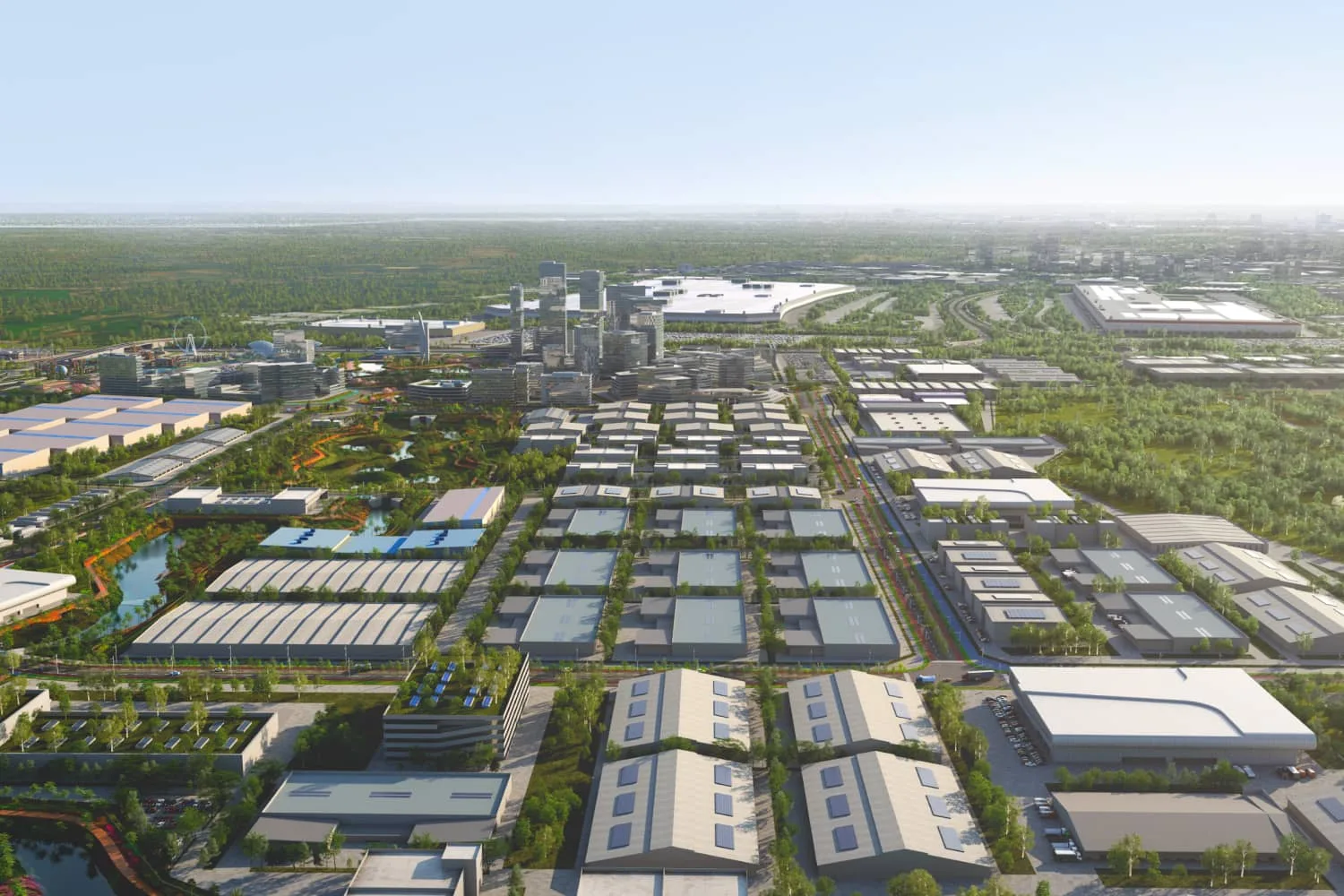
Manufacturing remains a critical pillar of Indonesia’s economic and investment landscape. As global companies reassess their supply chains and production locations, Southeast Asia continues to attract attention and Indonesia stands out due to its large domestic market, strategic location, and expanding industrial infrastructure. According to official statistics, manufacturing consistently contributes around 18% of Indonesia’s GDP, making it one of the country’s most significant value-generating sectors.
For investors, manufacturing offers more than production capacity. It provides access to a growing consumer base, regional export opportunities, and increasingly mature industrial ecosystems. This article examines why Indonesia’s manufacturing sector continues to attract investment, highlights key industries driving momentum, and presents a real-world example of how industrial estates support investor needs.
Why Manufacturing Attracts Investors
- Strategic Location and Market Access
Indonesia’s geographic position at the heart of ASEAN allows manufacturers to serve both domestic and regional markets efficiently. With established trade links to Southeast Asia, East Asia, and Australia, manufacturers operating in Indonesia benefit from diversified export routes. This strategic positioning reduces dependency on a single market and enhances supply chain resilience. - Strong Domestic Demand
Domestic consumption is one of Indonesia’s strongest economic foundations. Rising income levels and urbanization continue to fuel demand for manufactured goods such as vehicles, electronics, packaged food, and household products. For investors, this means manufacturing facilities are not solely dependent on exports, providing a more balanced demand structure. - Workforce and Industrial Capability
Indonesia’s large and relatively young workforce supports long-term manufacturing growth. Over time, skill levels in automotive, electronics, and consumer goods manufacturing have improved, supported by vocational training and industry partnerships. While labor costs remain competitive compared to some regional peers, productivity improvements make Indonesia increasingly attractive for higher-value manufacturing. - Industrial Infrastructure and Incentives
Manufacturing investment is also supported by the development of industrial estates and government-backed incentives. Special Economic Zones (SEZs), bonded logistics centers, and fiscal facilities help reduce operational complexity. Modern industrial estates now offer integrated infrastructure, logistics access, and utility readiness, reducing setup time for investors.
Key Sectors in Focus
- Automotive and Electric Vehicles (EVs)
The automotive industry remains one of the strongest magnets for manufacturing investment. Indonesia’s push toward EV production has encouraged expansions in vehicle assembly, battery components, and supporting supply chains. West Java and emerging areas such as Subang continue to attract automotive-related projects due to their proximity to ports and established suppliers. - Electronics and Electrical Equipment
Electronics manufacturing is gaining traction as companies diversify production locations within Asia. Investments in consumer electronics, components, and electrical equipment reflect Indonesia’s growing role in regional manufacturing networks, particularly for ASEAN markets. - Food and Beverage Manufacturing
Food and beverage manufacturing benefits directly from Indonesia’s population size and consumption patterns. Expansion in halal-certified products also supports export growth to the Middle East and neighboring Muslim-majority markets, making this sector attractive for both domestic and foreign investors.
Case Study: Subang Smartpolitan
- The Scenario
As manufacturers seek locations that go beyond land availability, the demand for integrated industrial ecosystems has increased. Investors now prioritize efficiency, sustainability, and connectivity alongside cost considerations. Subang Smartpolitan was developed to respond to these evolving expectations. - The Action
Designed as a modern industrial city, Subang Smartpolitan integrates ready-built infrastructure, efficient road access, and support facilities for manufacturing operations. The estate emphasizes smart systems, reliable utilities, and environmentally conscious planning to support long-term tenant needs.
By offering a planned industrial environment rather than fragmented development, the estate reduces setup risks and operational friction for investors entering Indonesia. - The Result
The approach has attracted manufacturing interest across automotive, electronics, and supporting industries. Investors benefit from faster operational readiness and improved logistics efficiency, reinforcing Subang’s role as an emerging manufacturing hub in West Java.
Indonesia’s manufacturing sector remains a magnet for investment in 2026. With the right combination of market size, workforce, and policy support, the country is positioned to strengthen its role as a regional manufacturing hub.