

Smart grid technology is transforming how manufacturers manage energy consumption, improve operational efficiency, and support sustainability goals. As electricity demand continues to increase across industrial sectors, businesses are seeking smarter and more reliable energy management systems.
Smart grid technology offers a modern solution by combining digital communication, automation, and real-time monitoring to optimize electricity distribution and consumption.
For manufacturing companies, adopting smart grid systems can lead to lower operational costs, improved energy reliability, and greater support for renewable energy integration. The advantages and challenges of smart grid technology is essential for businesses preparing for the future of smart manufacturing.
Understanding Smart Grid Technology
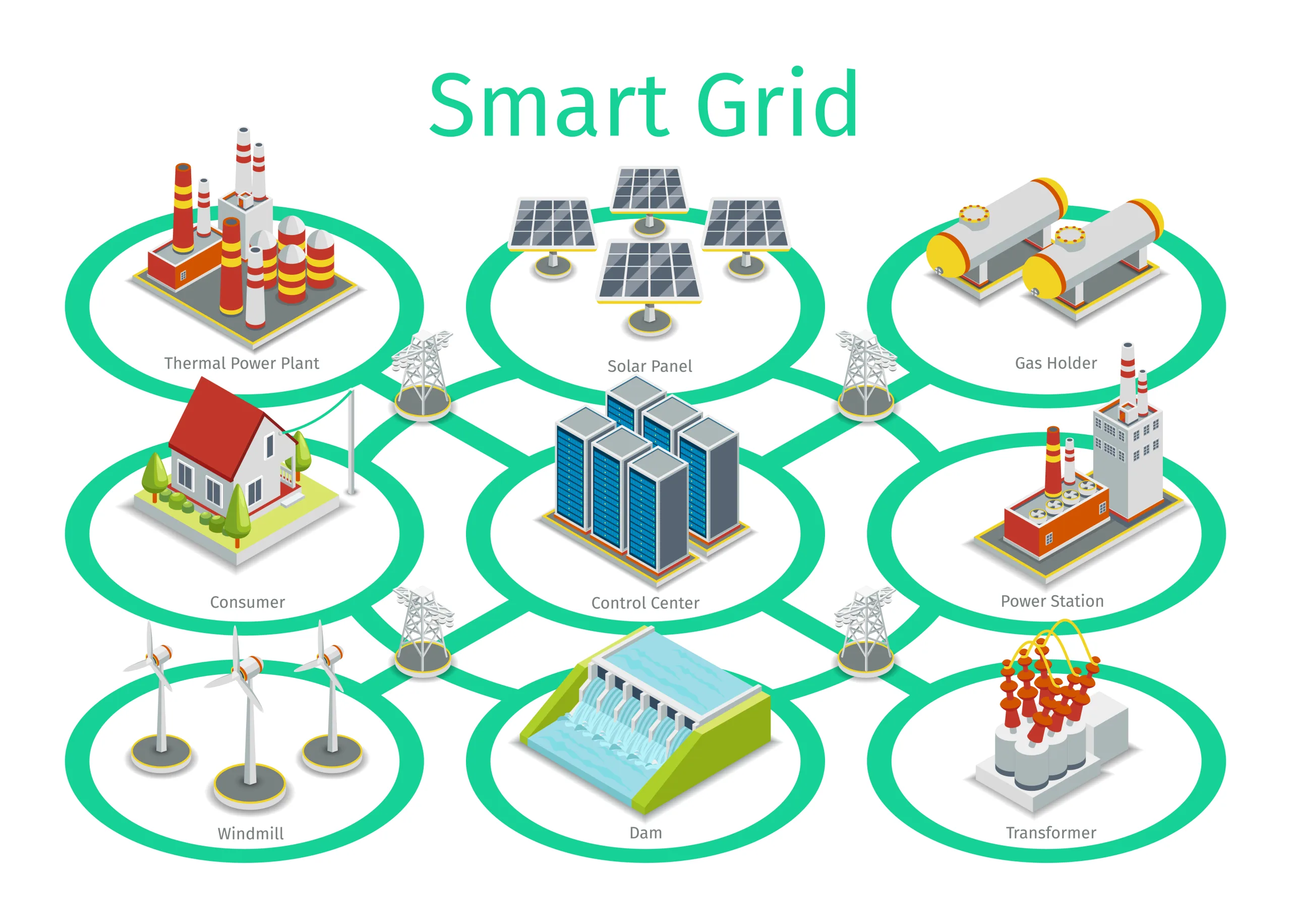
A smart grid is a complex electrical system that combines smart digital communication technology and an electrical system. The two-way flow of data and electricity allows the system to detect and react accordingly (self-healing properties).
The smart grid supports the integration of all types of power generation sources at any scale; and offers better, high-quality, safer, reliable, and sustainable electricity for regular and industrial customers.
Read More: Smart and Sustainable Manufacturing: Building Competitiveness for the Future
Smart Grid VS Traditional Grid Electricity
Smart grid and traditional grid have different approaches to different aspects of electricity production, market, transmission, distribution, and consumer.
1. Electricity production
The traditional grid produces electricity from several large size power plants, while the smart grid uses plenty of small plant producers.
2. Market
The traditional grid market is centralized, while the smart grid is decentralized without specific boundaries.
3. Transmission
The traditional grid uses large power lines and pipelines, while the smart grid mostly uses small-scale transmission.
4. Distribution
The traditional grid distributes the electricity from the top to the bottom, while the smart grid distributes it in both directions.
5. Consumer
In the traditional grid, the consumer is the passive party and is only responsible for paying the bill. On the other hand, the consumer in smart grid plays the active party where they also participate in the system.
Advantages of Smart Grid Technology
The technology offers plenty of advantages:
- Smart grid help to prevent blackout by rerouting electricity automatically to the area most needed, thus minimizing outages and their negative effect on the security, heating system, communication, and traffic.
- The automatic process and user controls in the smart grid system helps with the inefficiencies found in the traditional grid system. The system allows consumers, both individually and in the manufacturing industry, to monitor their use and cut down the unneeded electricity for a money-saving purpose.
- Smart grid system promotes the use of renewable energy sources, such as hydroelectric and solar – which helps to cut down energy consumption and reduce carbon emission.
- The integrated system management provides a better user interface, protective management, and improves the ability to meet customer demand.
- The system allows consumers to take parts in the whole system by providing the information, options on how to use the available supply, and how to optimize the operational system.
Disadvantages of Smart Grid Technology
Despite the many advantages of this system, there are some drawbacks to be aware of;
- Smart grid overhead costs are super expensive and time-consuming. However, it grows a different kind of market, thus creating more job opportunities.
- Violation of privacy standards from the presence of continuous data usage. The data could be used by other parties and even lead to a security issue due to malware, bugs, and hacks.
Read More: What is a Smart Industrial Park and Why It Matters for Global Investors
Nevertheless, the advantages outweigh the disadvantages; thus making a switch to smart grid becomes a preferred choice within the manufacturing industry.
The adoption of smart grid technology is transforming how manufacturers manage power usage and operational costs. Subang Smartpolitan provides a future-ready industrial park environment with integrated smart infrastructure that supports sustainable and technology-driven manufacturing operations.
FAQ
1. What is smart grid technology?
Smart grid technology is an advanced electricity network that uses digital communication systems to monitor, manage, and optimize the flow of electricity in real time, improving efficiency and reliability.
2. How does smart grid technology benefit manufacturing?
Smart grid technology helps manufacturers reduce energy waste, lower operational costs, improve power reliability, prevent outages, and optimize energy consumption through real-time monitoring.
3. What is the difference between a smart grid and a traditional power grid?
Unlike traditional power grids that rely on one-way electricity distribution, smart grids enable two-way communication and energy flow, allowing better control, automation, and integration of renewable energy sources.
4. Can smart grid technology support renewable energy integration?
Yes. Smart grids are designed to accommodate renewable energy sources such as solar and wind power while maintaining grid stability, efficiency, and energy security.
5. What are the challenges of implementing smart grid systems?
Common challenges include high initial investment costs, system complexity, cybersecurity risks, data privacy concerns, and the need for advanced infrastructure and skilled personnel.