

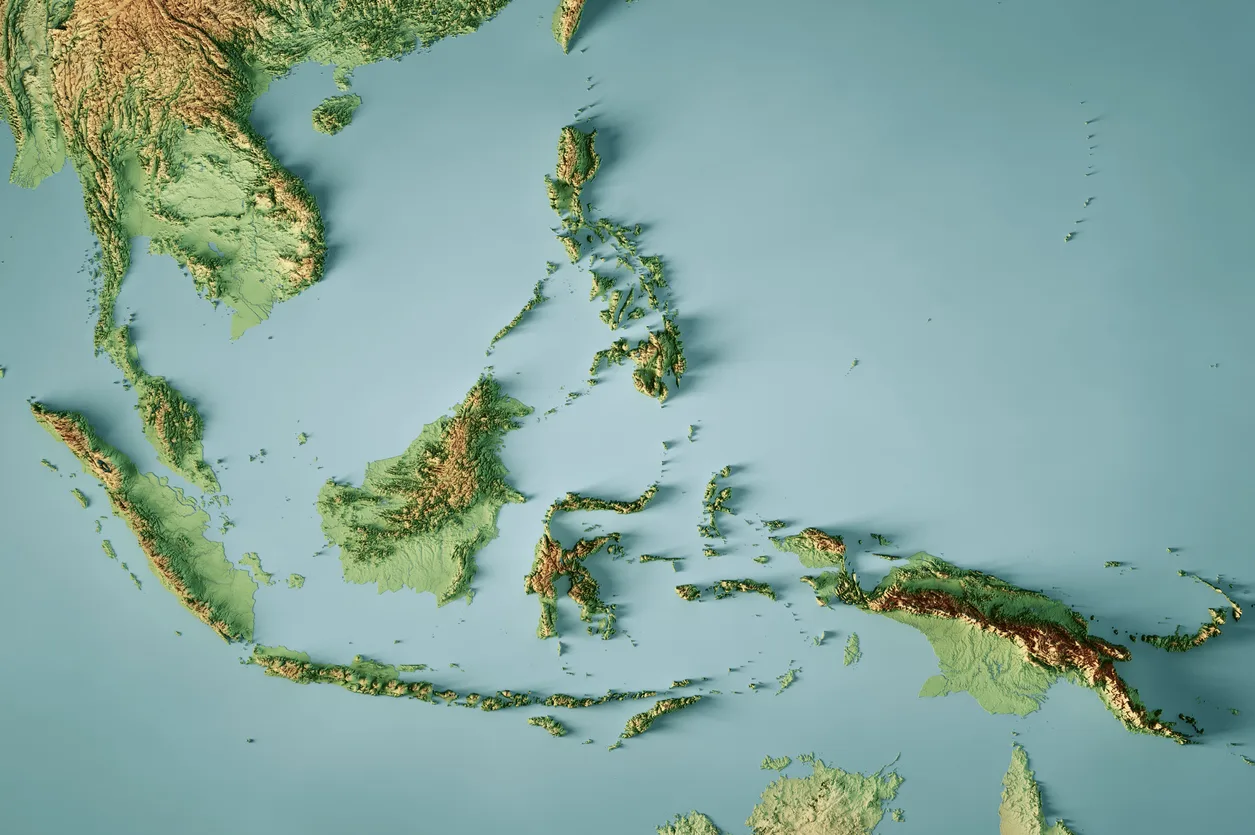
Indonesia, as the largest economy in Southeast Asia, presents a compelling landscape for foreign direct investment (FDI). However, successful investment hinges critically on strategic site selection. A nuanced understanding of capital inflows, regional industrial specialization, and operational priorities is essential for any multinational enterprise (MNE) looking to establish a robust footprint.
Understanding the Source of Investment: Who is Investing and Where?
Analyzing the origins of FDI provides crucial insight into major market trends and established supply chains. According to data from 2020–2025, China (including Hong Kong) and Singapore are the top two sources of FDI into Indonesia, injecting $72.9 billion and $80.5 billion, respectively. While Singapore ranks first in total investment amount, China (including Hong Kong) dominates the Secondary Sector (Manufacturing), contributing a remarkable 70.6% of the total manufacturing FDI inflow. This heavy concentration suggests that investors looking to engage in manufacturing should closely observe the site selection preferences of these dominant capital sources.
FDI Destination: The Concentration of Capital
The inflow of foreign capital is not distributed evenly across the archipelago; it shows a distinct concentration in certain areas. Between 2020 and 2025, the top three destinations for FDI were Central Sulawesi ($32.8 billion), West Java ($31.3 billion), and Jakarta ($23.3 billion). These three locations alone account for nearly 43% of the total FDI inflows (approximately $87.4 billion out of $201.8 billion). This concentration signifies established infrastructure, robust supply chains, and a proven track record of facilitating foreign business, making these locations primary targets for site selection.
Regional Industrial Specialization and Diversity
Identifying the existing industrial ecosystem is paramount, as proximity to suppliers, skilled labor, and relevant infrastructure directly impacts operational efficiency. Indonesia’s regions exhibit strong industrial specializations:
- Java: The most diverse region, specializing in Automotive, Motorbike/Spare parts, Machinery Manufacturing, EV Battery, Consumer Goods, Medical Devices/Pharmaceuticals, Chemicals, Biomedical sciences manufacturing, Electronics, Garments, and Textiles.
- Sumatra: Focuses on Oil, Gas, Energy, Plantation Industries, Electronics, Textiles, Chemical, and Petrochemical Industries.
- Kalimantan: Dominates in Downstream Industries, Renewable Energy, Biofuels, and Mechanical Engineering.
- Sulawesi: Key sectors include Mining, Nickel Processing, Agriculture and Food Processing, Manufacturing, and Assembly.
- North Maluku: Specialized in Nickel, Mining, and Mineral Processing.
Specialization Within Java: Beyond the Island Level
Even within the island of Java, a deeper dive reveals specialized industrial clusters that guide investment decisions. West Java has historically been a hub for the Automotive sector, leveraging its access to Jakarta and major ports. Central Java, particularly known for its skilled labor pool, is a stronghold for the Textile and Garment industries. Meanwhile, East Java has developed specialized clusters for Steel and Metal production, capitalizing on port access and heavy industry infrastructure. Recognizing these intra-island differences is crucial for optimizing manufacturing footprints.
The Critical Factor of Land Price
While industrial specialization is key, land acquisition costs often serve as a significant initial barrier, particularly in high-demand areas like Java. Land price per square meter in Java varies significantly, reflecting the density, infrastructure, and demand of each sub-region. Currently, prices range from $150–$300 USD in Banten and $100–$200 USD in West Java. In comparison, Central Java offers the lowest range at $60–$150 USD, while East Java sits between $120–$180 USD. Investors must carefully balance the relatively higher Capital Expenditure (CAPEX) associated with land acquisition in key areas like Banten and West Java against the lower prices found in Central Java. A cheaper initial investment (CAPEX) might need to be weighed against the potential increase in operational costs related to logistics and supply chain fragmentation in the long term
The Strategic Conclusion: Beyond Capital Expenditure (CAPEX)
Successful site selection is fundamentally a strategic decision that weighs initial costs against long-term operational efficiency. Investors must adopt a holistic view based on several key principles:
- Logistics Efficiency: Lowering logistics costs is critical for long-term profitability.
- Proximity to Suppliers: Being as close as possible to where you’re supplying to is vital.
- Operational Expenditure (OPEX) Priority: Many investors now consider OPEX more important than CAPEX. A higher initial CAPEX might be justifiable if it results in significantly lower OPEX.
- Partnership: Remember, your industrial estate management is your partner for life.
Ultimately, the “best location” for investment depends entirely on a lot of factors. It requires a comprehensive due diligence process to align the specific needs of the MNE (labor, logistics, energy, specialization) with the nuanced offerings of Indonesia’s diverse industrial regions.