




Manufacturing efficiency directly affects profitability, production stability, and long-term competitiveness. Yet many manufacturers recognize inefficiencies only after production costs rise, delivery schedules become inconsistent, or operational bottlenecks begin to affect customer satisfaction.
Higher output alone does not automatically create healthier margins. In many cases, companies increase labor hours, machine utilization, or production volume while waste, downtime, and operational complexity continue growing behind the scenes. Over time, those hidden inefficiencies can quietly erode profitability.
This article explains how manufacturers can improve manufacturing efficiency through process optimization, workforce management, technology integration, and smarter industrial infrastructure planning.
What Is Manufacturing Efficiency?
Manufacturing efficiency refers to how effectively a company converts resources (e.g., labor, raw materials, machinery, energy, and time) into finished products. To be precise, efficient manufacturing means maximizing output while minimizing waste, downtime, defects, and operational losses.
Manufacturing efficiency directly influences operational stability and business performance. Efficient production systems help manufacturers reduce costs, improve product consistency, stabilize delivery timelines, and respond more quickly to market changes.
In reality, many manufacturers still operate within 60%–80% efficiency ranges because of recurring issues such as material waste, equipment failures, and inconsistent workflows. For companies competing in high-demand industries, those inefficiencies can significantly affect scalability and profitability.
Efficiency also extends beyond internal production. It influences supply chain resilience, pricing flexibility, customer trust, and long-term operational sustainability.
Key Factors Affecting Manufacturing Efficiency
Several interconnected operational factors determine how efficiently a manufacturing facility performs. Weaknesses in one area often create ripple effects across the entire production chain.
1. Labor Productivity
Workforce productivity remains one of the strongest drivers of manufacturing efficiency. Skilled employees typically complete tasks faster, identify operational issues earlier, and maintain more consistent production quality.
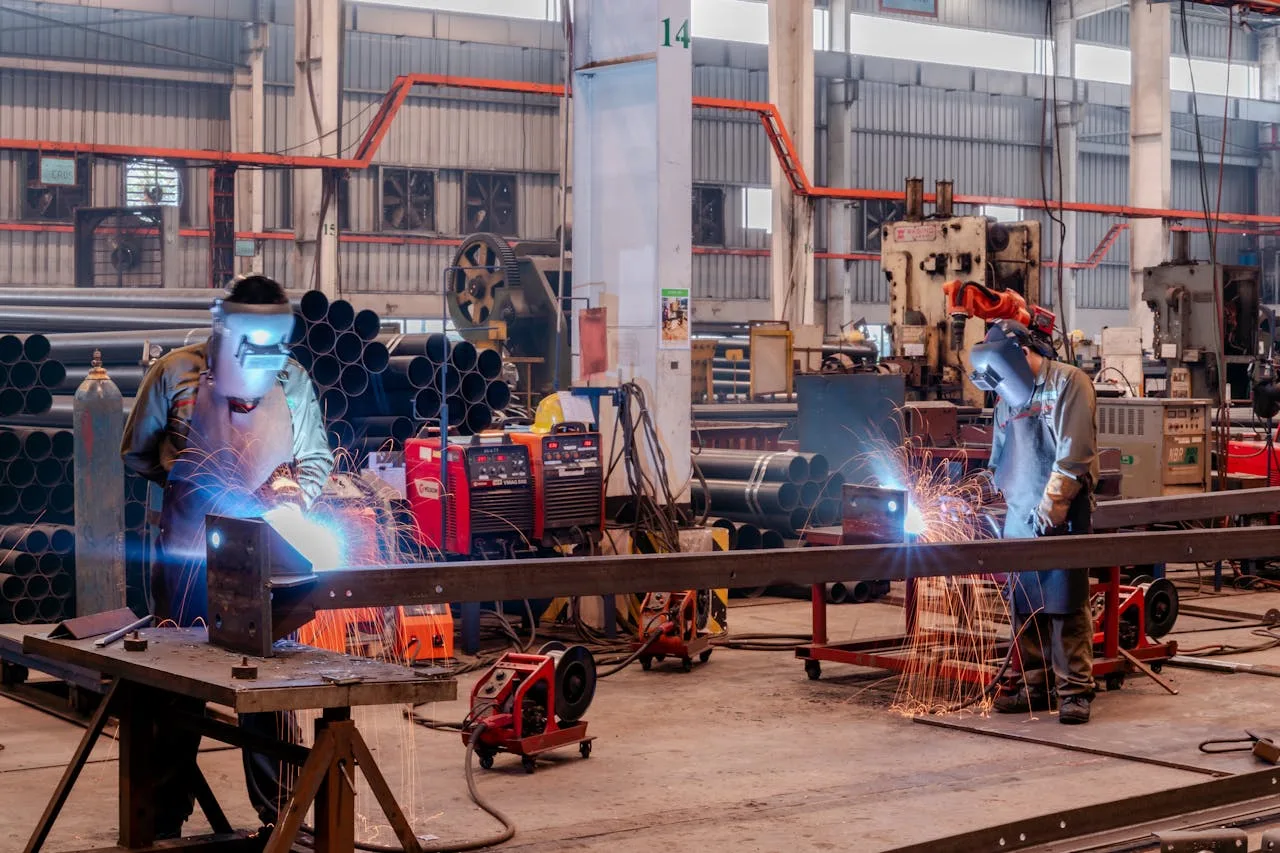
According to Advanced Technology Services, labor utilization becomes inefficient when employees spend excessive time waiting, performing repetitive manual work, or dealing with avoidable production interruptions. Regular training programs, cross-functional skill development, and standardized work instructions help reduce delays while maintaining output consistency.
Employee engagement also plays a major role. Clear responsibilities and streamlined workflows improve morale while reducing confusion on the production floor. As a result, teams can operate more consistently and efficiently.
2. Logistics and Supply Chain Coordination
Even highly optimized production lines can struggle when supply chain coordination breaks down.
Material shortages, delayed shipments, warehouse inefficiencies, and inaccurate production scheduling can disrupt manufacturing operations and increase downtime. Stronger supplier collaboration and real-time inventory visibility help manufacturers reduce bottlenecks and stabilize production cycles.
Manufacturers that improve logistics coordination often benefit from:
- Shorter production lead times
- Lower inventory holding costs
- More predictable scheduling
- Reduced operational disruptions
As production systems become more interconnected, supply chain reliability becomes increasingly important for maintaining operational efficiency.
3. Technology Adoption
Technology now plays a central role in modern manufacturing operations. Real-time monitoring systems, predictive maintenance tools, Industrial IoT (IIoT), automation, and AI-driven analytics help manufacturers identify inefficiencies faster and improve operational decision-making.
It is important to note that automation extends beyond robotics. Automated data collection and live machine monitoring provide manufacturers with operational visibility that helps reduce downtime and improve throughput.
However, technology integration must align with operational goals. Poorly connected systems can increase complexity rather than improve efficiency. Manufacturers often achieve better results when they implement technologies gradually while ensuring operational compatibility across departments.
4. Production Processes
Inefficient workflows often create hidden operational costs through excessive motion, waiting time, redundant approvals, and inconsistent procedures.
Lean manufacturing methodologies help companies simplify operations and eliminate waste. Techniques, such as
- 5S methodology,
- Kaizen continuous improvement,
- value stream mapping, and
- standardized work systems,
can significantly improve production consistency and operational predictability.
Streamlined process design reduces rework, production variability, and operational inefficiencies that accumulate over time. Regular process audits also help manufacturers identify outdated workflows that no longer support current production demands.
Read More: How to Choose the Best Manufacturing Location for Cost and Efficiency
How to Measure Manufacturing Efficiency
Manufacturing efficiency improves more effectively when companies track measurable operational benchmarks.
1. Output vs. Input
One of the most common approaches compares production output against the resources consumed.
The standard production efficiency formula is:
Production Efficiency = (Actual Output / Standard Output) x 100%
For example, if a factory targets 100 units but produces 85 units, its production efficiency rate is 85%.
Manufacturers also evaluate production cost per unit to determine whether operational expenses remain aligned with industry standards and profitability targets.
2. Key Manufacturing Efficiency Metrics
Several KPIs help manufacturers evaluate operational performance more accurately:
- Overall Equipment Effectiveness (OEE): Measures equipment availability, performance, and quality output.
- Cycle Time: Tracks the time required to produce one finished unit.
- Material Yield: Measures how efficiently raw materials become finished products.
- Labor Efficiency Ratio (LER): Evaluates workforce utilization effectiveness.
- First Pass Yield: Tracks how many products meet quality standards without rework.
As mentioned in L2L, OEE remains one of the most widely used manufacturing metrics because it provides visibility into downtime, speed losses, and quality defects simultaneously.
Strategies to Improve Manufacturing Efficiency
Improving manufacturing efficiency requires continuous operational refinement rather than isolated short-term fixes.
1. Process Optimization
Process optimization improves efficiency by identifying bottlenecks, redundant workflows, and avoidable production delays.
Lean manufacturing techniques such as value stream mapping, 5S implementation, Kaizen, and waste elimination help manufacturers improve throughput without immediately increasing capital investment.
MachineMetrics explains that workflow audits and process mapping are highly effective for uncovering inefficiencies that quietly accumulate over time. In many facilities, relatively small operational improvements can significantly increase productivity and reduce waste.
Standard operating procedures (SOPs) also improve consistency because employees follow uniform workflows across production activities.
2. Workforce Management
Operational efficiency depends heavily on workforce capability and adaptability. Manufacturers that invest in ongoing employee training often experience:
- Fewer production errors
- Faster issue resolution
- Better product consistency
- Greater operational flexibility
Cross-training programs also improve workforce resilience by enabling employees to support multiple operational roles during staffing shortages or production fluctuations.
Frontline employees and middle managers frequently identify practical efficiency improvements that leadership teams may overlook. Encouraging operational feedback, therefore, supports both engagement and continuous improvement.
3. Technology Integration
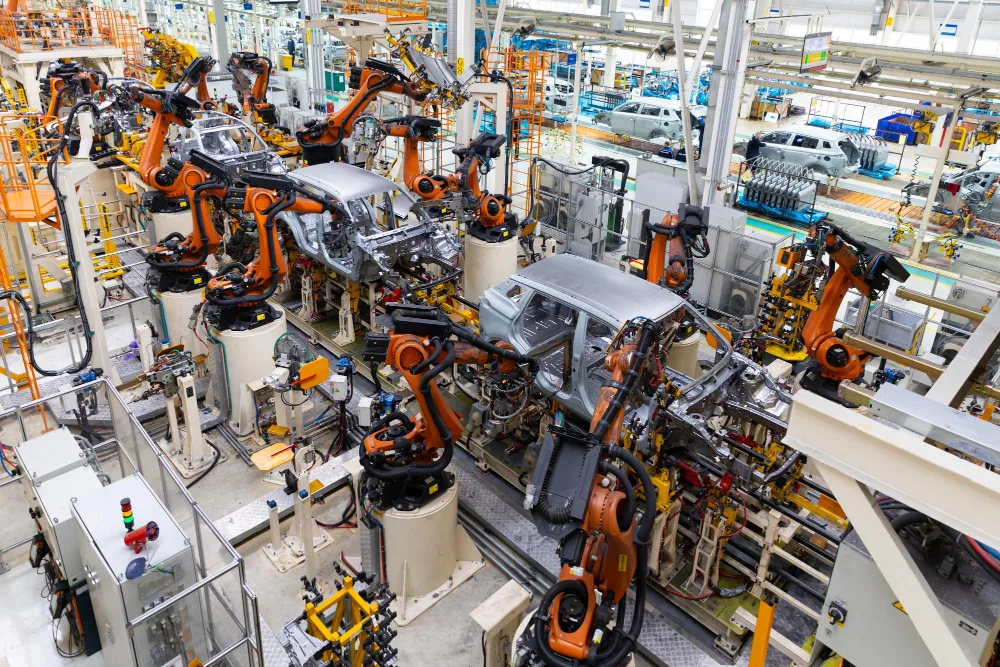
Modern manufacturing increasingly relies on digital systems to improve operational responsiveness and visibility.
Automation reduces repetitive manual work, while predictive maintenance systems help prevent unexpected equipment failures. Real-time production dashboards also allow manufacturers to respond faster to operational disruptions before they escalate into larger downtime events.
Advanced Technology Services highlights that Industry 4.0 technologies, including IIoT monitoring systems and AI-driven analytics, help manufacturers improve production accuracy while supporting more data-driven operational decisions.
The Role of Cost in Manufacturing Efficiency
Manufacturing efficiency improvements often create measurable financial benefits across multiple operational areas.
1. Labor Costs
Labor expenses rise when workflows become inconsistent, downtime increases, or employees spend excessive time on non-value-added tasks. Manufacturers can improve labor efficiency by:
- Reducing idle time
- Standardizing operational procedures
- Improving workforce scheduling
- Automating repetitive activities
Better labor utilization helps companies maintain productivity without sacrificing product quality.
2. Operational Costs
Operational expenses extend beyond labor and include:
- Energy consumption
- Machine downtime
- Scrap rates
- Maintenance costs
- Inventory inefficiencies
Consultport notes that manufacturers improve profitability by reducing waste, stabilizing production schedules, and improving asset utilization. Even relatively small reductions in downtime or scrap can significantly improve margins in high-volume manufacturing environments.
Scaling Production Without Losing Efficiency
Scaling production often introduces operational complexity that can reduce efficiency if systems are not prepared.
As production volumes grow, manufacturers commonly face:
- Increased coordination challenges
- Higher logistics pressure
- Greater machine utilization strain
- More complex workforce management
Without standardized systems and integrated planning frameworks, operational inefficiencies can multiply rapidly.
Efficient scaling depends on synchronized scheduling, infrastructure readiness, preventive maintenance systems, and reliable supply chain coordination. Manufacturers that scale successfully often invest early in digital visibility tools and flexible production planning systems.
Smart Systems in Modern Manufacturing
Smart manufacturing systems are transforming how industrial operations manage efficiency.
IoT-enabled infrastructure, predictive analytics, automated monitoring systems, and integrated planning platforms help manufacturers optimize production in real time. These technologies improve operational transparency while reducing delays, equipment failures, and material waste.
Smart systems also strengthen long-term operational resilience. Manufacturers gain better visibility into production trends, maintenance requirements, and operational risks, enabling faster responses to market fluctuations and supply chain disruptions.
Common Mistakes That Reduce Manufacturing Efficiency
Many manufacturers unintentionally reduce efficiency by focusing on short-term productivity gains instead of sustainable operational improvements.
The following are common operational mistakes you should avoid:
- Prioritizing short-term gains over long-term scalability
- Ignoring data-driven operational decisions
- Excluding employees from improvement discussions
- Delaying preventive maintenance
- Failing to measure operational impact consistently
Manufacturers also frequently confuse productivity with efficiency. As SafetyCulture explains, higher output does not automatically indicate efficient operations if defects, waste, and resource consumption continue increasing simultaneously.
Read More: Industrial Land Investment: What to Know
Building More Efficient Manufacturing Operations for Long-Term Growth
Manufacturing efficiency influences nearly every aspect of industrial performance, including production costs, operational stability, logistics coordination, and customer satisfaction. Manufacturers that continuously optimize workflows, strengthen workforce capability, adopt smart technologies, and improve operational visibility are often better positioned to compete in rapidly evolving markets.
Industrial infrastructure also plays an increasingly important role in operational efficiency. Manufacturers expanding in Indonesia now require industrial ecosystems that support logistics accessibility, digital connectivity, and long-term scalability.
This is where Suryacipta’s Subang Smartpolitan continues to support modern industrial growth through integrated industrial estate development.

Located in the heart of the Java Industrial Corridor, Subang Smartpolitan represents a modern integrated industrial ecosystem designed to support high-performance manufacturing. As a pioneer of the Rebana Metropolitan Development Project, it brings together industrial, commercial, residential, and educational zones into one smart, sustainable development.
Covering approximately 2,700 hectares, the industrial park is designed to support advanced manufacturing practices through IoT-based infrastructure and seamless connectivity. With direct access to toll roads, the upcoming West Java International Airport, Patimban Seaport, and high-speed rail connectivity, the area is positioned to support highly efficient logistics and supply chain operations.
Beyond infrastructure, the ecosystem supports long-term operational stability through integrated planning and smart city design. This enables manufacturers to improve efficiency, reduce logistics delays, and scale operations more effectively.
For businesses looking to strengthen their industrial footprint in Indonesia, exploring solutions from experienced industrial estate developers in Indonesia can be a strategic step toward sustainable growth, and integrated industrial ecosystems like Subang Smartpolitan can definitely help support smarter, more connected, and more efficient manufacturing operations.
FAQ
1. What is the difference between manufacturing efficiency and productivity?
Manufacturing productivity measures output relative to input, such as units produced per labor hour. Manufacturing efficiency focuses more broadly on minimizing waste, reducing downtime, improving quality, and optimizing resource usage throughout operations. A factory can increase productivity while still operating inefficiently if waste and defects continue rising.
2. What is considered a good manufacturing efficiency rate?
Efficiency benchmarks vary depending on industry, production complexity, and operational maturity. Many manufacturers operate at 60% to 80% efficiency. Companies with highly optimized workflows, strong maintenance systems, and advanced automation often achieve significantly higher performance.
3. How does automation improve manufacturing efficiency?
Automation improves manufacturing efficiency by reducing manual errors, stabilizing production cycles, improving data accuracy, and minimizing repetitive labor tasks. Automated systems also provide real-time operational visibility, helping manufacturers respond faster to downtime, bottlenecks, and quality issues.
4. Why is OEE important in manufacturing?
Overall Equipment Effectiveness (OEE) helps manufacturers evaluate machine performance by combining equipment availability, production speed, and product quality into a single metric. OEE helps identify operational losses and areas that require process improvement.
5. How can industrial infrastructure affect manufacturing efficiency?
Industrial infrastructure affects the speed of logistics, transportation accessibility, utility reliability, and operational scalability. Manufacturing facilities located within integrated industrial estates often benefit from stronger connectivity, more efficient supply chain coordination, and infrastructure systems designed to support long-term operational efficiency.


2 Comments