


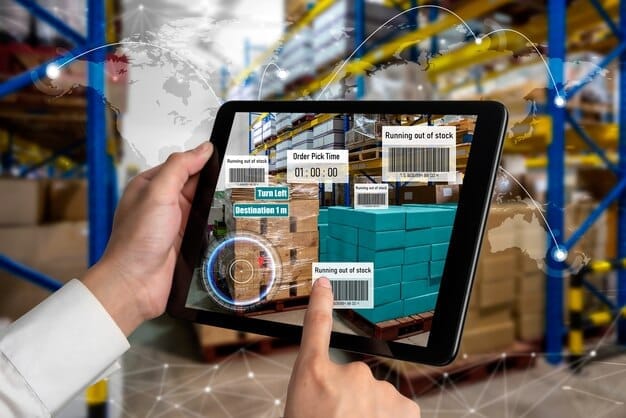

The rapid development of Industry 4.0 has transformed how industries manage their production and distribution processes. As global supply chains become more complex, businesses need more than traditional supply chain systems to maintain efficiency and competitiveness.
Smart supply chain management has emerged as a solution by combining advanced technologies, real-time data, and automated processes to create a more connected and responsive supply chain ecosystem.
Unlike conventional supply chains that operate through separated processes, smart supply chains enable seamless communication between suppliers, manufacturers, logistics providers, and customers. This digital transformation allows businesses to predict disruptions, optimize operations, and make faster data-driven decisions.
What is Smart Supply Chain Management?

Smart supply chain management is the process of managing the flow of products, information, and resources by utilizing advanced technologies such as the Internet of Things (IoT), Artificial Intelligence (AI), big data analytics, and cloud computing.
The system connects every stage of the supply chain, starting from raw material sourcing, production, inventory management, transportation, until the final product reaches customers.
The main difference between traditional and smart supply chains lies in visibility and decision-making. Traditional supply chains often rely on historical data and manual processes, while smart supply chains use real-time information to automatically identify problems and optimize operations.
Through digital integration, companies can create a more flexible, efficient, and resilient supply chain system that is better prepared to face market changes.
Read More: A Guide to Buying Land in Indonesia for Business
Why is Smart Supply Chain Management Important in Industry 4.0?
Traditional supply chains were designed for a simpler business environment where suppliers, manufacturers, and customers operated with limited connections. However, modern industries face more complex challenges, including global competition, unpredictable demand, supply disruptions, and increasing customer expectations.
In Industry 4.0, companies need a supply chain system that can provide real-time visibility and faster responses. This is where smart supply chain management becomes essential.
By integrating digital technologies into supply chain operations, businesses can:
- Monitor production and inventory conditions in real time
- Identify potential disruptions before they affect operations
- Improve communication between supply chain partners
- Optimize resources and reduce unnecessary costs
- Create faster and more accurate business decisions
Smart supply chains allow industries to move from a reactive approach into a predictive and proactive operational model.
Benefits of Smart Supply Chain Management
1. Predicting Production Bottlenecks
One of the biggest advantages of smart supply chain management is its ability to predict potential bottlenecks.
Through connected sensors and real-time production data, companies can identify delays, equipment issues, or material shortages before they interrupt the production process.
Early detection helps manufacturers minimize waste, maintain production schedules, and improve overall operational efficiency.
2. Smart Predictive Analysis
Smart supply chains utilize AI and data analytics to analyze large amounts of operational data.
The system can identify patterns, predict future demand, and provide recommendations for better planning. This enables companies to make accurate decisions based on real-time insights instead of relying only on assumptions or historical data.
3. Improved Supply Chain Transparency
Supply chain transparency has become increasingly important as businesses operate across multiple regions and involve various partners.
Smart supply chain management provides visibility throughout the entire supply chain process, allowing companies and customers to track product movement, inventory status, and operational performance.
This transparency improves trust between supply chain partners and helps companies meet customer expectations.
4. Predictive Maintenance
Unexpected equipment failure can create significant production downtime and financial losses.
With IoT-enabled devices and smart monitoring systems, companies can track equipment conditions continuously. The system can predict when maintenance is required before a failure occurs.
This approach helps extend equipment lifespan, reduce downtime, and maintain production reliability.
5. More Effective Planning
Real-time data allows companies to understand production conditions, customer demand, and supply availability more accurately.
With better information, businesses can create more effective production schedules, optimize inventory levels, and respond faster to unexpected changes.
Read More: Industrial Estates in Indonesia: How They Work and Why They Matter
Key Components of Smart Supply Chain Management
To successfully implement a smart supply chain, companies need several important components that support digital connectivity and automation.
1. Digital Ecosystem
A digital ecosystem is the foundation of smart supply chain management. Every part of the supply chain needs to be connected through digital systems to ensure smooth data exchange.
Without complete digital integration, companies may experience gaps in information that reduce the effectiveness of supply chain optimization.
2. Internet of Things (IoT)
IoT plays an important role in creating connected supply chains. Through sensors and connected devices, companies can monitor equipment performance, track inventory movement, and collect real-time operational data.
This information helps businesses identify problems quickly and take immediate action.
3. Artificial Intelligence (AI)
Artificial Intelligence enables smart supply chains to analyze complex data and generate predictive insights.
AI can support demand forecasting, inventory optimization, route planning, and decision-making processes. By reducing manual analysis, AI helps companies improve accuracy and efficiency.
4. Supply Chain Control Tower
A supply chain control tower acts as a centralized platform that collects and analyzes data from different supply chain activities.
Through this system, manufacturers, suppliers, and logistics partners can access relevant information and collaborate more effectively.
The control tower improves visibility, coordination, and response time when dealing with supply chain disruptions.
Smart Supply Chain Management Technologies in Industry 4.0
The development of Industry 4.0 has accelerated the adoption of several technologies that support smart supply chain management.
1. Internet of Things (IoT)
Enables real-time tracking and monitoring of assets, inventory, and production processes.
2. Artificial Intelligence (AI)
Supports predictive analysis and automated decision-making.
3. Big Data Analytics
Processes large volumes of information to identify trends and improve supply chain strategies.
4. Cloud Computing
Provides flexible data storage and enables collaboration between different supply chain participants.
5. Automation and Robotics
Improves operational speed and accuracy in manufacturing and warehouse activities.
Read More: Beyond Factories: The Rise of Integrated Industrial Townships
The Future of Smart Supply Chain Management
As industries continue adopting digital transformation, smart supply chain management will become a critical factor for business competitiveness.
Future supply chains will become more autonomous, predictive, and connected through advanced technologies such as AI, automation, and real-time analytics.
Companies that successfully implement smart supply chain solutions will have better control over operations, faster response capabilities, and stronger resilience against future disruptions.
Subang Smartpolitan by Suryacipta is the industrial area that was located in the heart of the supply chain corridor. The industrial location is equipped with a smart environment, smart infrastructure, and smart facilities that support supply chain management application.
Located near major infrastructure, including Kertajati International Airport, the Trans Java Toll Road, and Patimban Seaport, Subang Smartpolitan is a strategic industrial area that works great for major industries including automotive, information technology, and the electronic industry.
FAQ
1. What is smart supply chain management?
Smart supply chain management is a digital approach to managing supply chain activities using technologies such as IoT, AI, and data analytics to improve efficiency and decision-making.
2. Why is smart supply chain important in Industry 4.0?
Smart supply chains help industries achieve better visibility, faster response, and improved operational efficiency by using real-time data and connected technologies.
3. What technologies are used in smart supply chain management?
Key technologies include IoT, artificial intelligence, big data analytics, cloud computing, automation, and supply chain control towers.
4. How does IoT improve supply chain management?
IoT enables real-time monitoring of equipment, inventory, and logistics activities, helping businesses identify issues and optimize operations.
5. What are the benefits of smart supply chain management?
Smart supply chain management improves productivity, reduces costs, minimizes disruptions, enhances transparency, and supports better business decisions.


1 Comments